AI Reverse Engineering Killed Software Again? REA, and the Myth That "Software Is Dead"
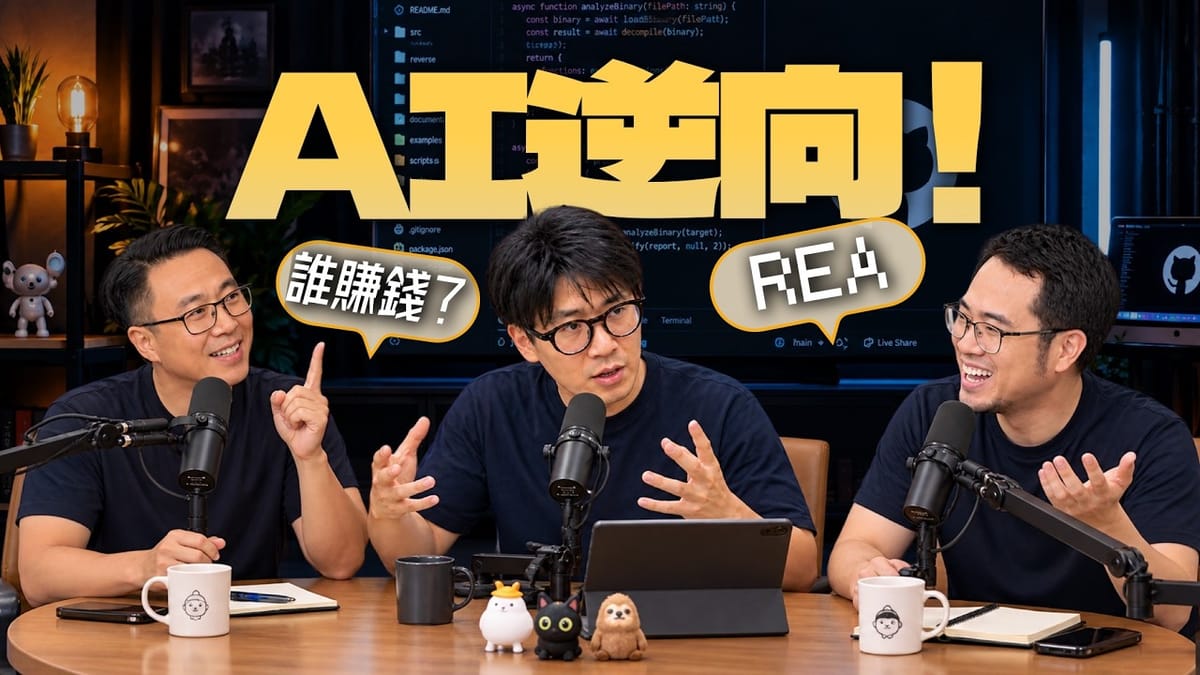
The tech world has been scared witless lately by so-called "AI reverse engineering." Every self-media outlet is wailing about "software is dead" and "SaaS doomsday," and honestly, I had to laugh. What's the panic about? Some guy cloned the entire Adobe suite because he didn't want to pay a monthly fee? A few PS5 games got ported? A Korean bank got its intranet breached by a DeepSeek V4-Flash? And suddenly everyone's wetting their pants? What exactly is there to panic about? Software is dead? Chinese bosses declared software stone-cold dead 20 years ago! Who bought a legit license back then? Everyone just pirated it! Then came the SaaS era, and they simply poached the whole team to do on-site custom work and bought it out in one lump sum! Something that was sentenced to death 20 years ago — and now AI reverse engineering gets to swagger in and play the big bad wolf?
Reverse everything? It's just a guessing game with 126 tools bundled together!
The whole internet is hyping some magic tool called REA that claims to "reverse engineer anything," as if installing it lets you kick down any big company's iron gate at will. But strip it down to its underwear — what kind of hacker magic is it, really? It's nothing more than 126 open-source tools that have existed in the industry forever, bundled into a toolbox! What is reverse engineering, really? Put plainly, it's the art of guessing! You know the output, and you're blindly guessing how the source code behind it was written. Today's AI is genuinely smart — it can guess its way through simple obfuscation and encryption. But does that count as independent R&D? It's like going to a restaurant, eating a plate of braised pork, and having a chef friend taste a bite. He smacks his lips: "Mm, star anise, Hunan tribute pepper." He goes home and plates up something that tastes identical. That's reverse engineering. But did the original chef wash his hands before cooking? What secret ingredients went into that master stock? Can your tongue-guessing friend reverse engineer any of that? The two dishes look the same, but the truly critical hidden details in that kitchen — you know nothing about them!
Kill the software vendors?
Even more absurd: plenty of clever types have come to me with suggestions. A few days ago someone proposed: "Since AI reverse engineering is so amazing, software salespeople should team up with resellers to stockpile cheap tokens, then sell them to big clients to reverse engineer their own CRM and ERP — hit it and run! Enterprises have suffered under bloodsucking vendors long enough. Wouldn't killing them off be great?" When I hear that, I want to spray water in their face. You're that desperate to get rich? Commercial reverse engineering is flat-out illegal! If you really try to make money off this, believe me — the cops will hand you a pair of silver bracelets the very next day. And step back a bit: do you think reverse engineering with an LLM will actually let you get away with it? Use Claude or Codex for malicious reverse engineering legitimately, and the vendors' risk controls will shut your account down in the blink of an eye. Step back further: do Microsoft and Adobe write code as a charity? These giants survive because they have the most vicious legal teams on the planet! And Disney's legal army, the strongest on Earth. You buy one copy of software, reverse engineer 99 copies for the whole company to use, and one cease-and-desist letter will sue you into bankruptcy! Being able to guess the code and being able to monetize it are separated by a thousand miles!
An Excel spreadsheet sold as SaaS? Projects like that should have died long ago!
So if reverse engineering can't be freely commercialized, why are so many people online crying that "software is dead"? Which software actually deserves to die? The answer is brutal: it was never real software engineering that deserved to die — it's the garbage SaaS that could have been handled by a single local Excel spreadsheet, but got wrapped in a web shell and charged an expensive annual fee! Those parasites who con clients off information asymmetry deserve to be eliminated by the times! Look at the SaaS companies listed in Hong Kong — how badly have their stock prices collapsed these past two years? Which bag-holding investor hasn't lost their shirt? When LLMs exploded two years ago, these mediocre companies with zero moat were already sentenced to death. As long as your core functionality depends on running locally, in front of today's AI you're basically running around with your pants down. Smart people moved their core algorithms and high-dimensional data to the cloud and made them a black box long ago. You can reverse engineer the frontend, replicate the interface — but can you reverse engineer a hundred-billion-scale compute black box in the cloud? You can't even touch it! Your only option left is expensive black-box distillation, and can an ordinary thief afford that compute bill? What gets instantly killed by reverse engineering is nothing but the bubble that should have died anyway.
The endgame of reverse engineering is inevitably forward engineering!
After crushing all the flashy tricks, where are the real opportunities of the future? What is the steel fortress that no amount of AI can reverse engineer? Three points: First, good news for hardware startups in Shenzhen's Huaqiangbei! Foreign geeks buy cheap air conditioners, sniff the LAN protocol, reverse engineer it, and build custom controls into Vision Pro for spatial remote control. Since pure software is depreciating, the combination of software with hardware, home appliances, and drones is the most profitable new blue ocean! Second, the "chef doesn't wash his hands" tacit knowledge inside industrial software. What's the tool wear coefficient for extreme cutting on a CNC machine? How do you calculate multi-axis tolerance compensation for complex parts? It's all in the old engineers' heads. Burn all the AI compute you want — can you reverse engineer the flesh-and-blood experience of the physical world? Third, absolute control of industry standards. Red Hat's Linux is open source across the entire internet — so why did IBM buy it for $34 billion? Because the Fortune 500 weren't buying source code; they were buying enterprise-grade security certification, financial compliance, and rock-solid monthly vulnerability patches! If you don't use it, you can't get into the ecosystem — that's the real moat! More ironically: a company OpenAI acquired for billions — a former employee bragged they reverse engineered the product in 10 days, only to be called out by an expert: the code had already been secretly absorbed by OpenAI's pre-training! You think you're reverse engineering it? They forward-absorbed it long ago! It's so much like those Little Raccoon Water Margin cards from childhood — everyone bought whole boxes and donated them, just to turn the cards into NFTs. The official IP holder sits on the core IP and ecosystem, watching fans frantically reverse engineer and remix, and it only spins their commercial flywheel faster! You think you're using reverse engineering to disrupt the world, but in the end you're just doing free labor for the forward evolution of large models.
So stop being scared by the cheap hot air from people peddling "software is dead." Whether it's AI-assisted coding or the flood of reverse engineering hype, it was never a doomsday — it's a baptism that washes away the fake fire. It's like a ruthless deboning knife, cutting out all the impostor shell companies and forcing everyone back to solid professional fundamentals. There's no safe harbor in this era. Only those who can provide irreplaceable industry standards get the last laugh. Because in the cruel logic of technological evolution, the endgame of reverse engineering can only ever be forward engineering!
Then again, watching a bunch of people in this circle spend their days guarding their own code from being reverse engineered, and their nights secretly using AI to reverse engineer competitors — I can't help but laugh. It's like the head chef guarding his secret recipe from the apprentice, only to turn around and find the apprentice has written down, in full detail, even the chef's habit of not washing his hands — right into the prompt!
The endgame of reverse engineering is always forward engineering!
[Subscribe to the JustSayAI Daily Brief] 📮JustSayAI Daily Brief · Fan-exclusive perks Two emails a day · One-tap audio briefing! Now fully available via email + IM + Skill